
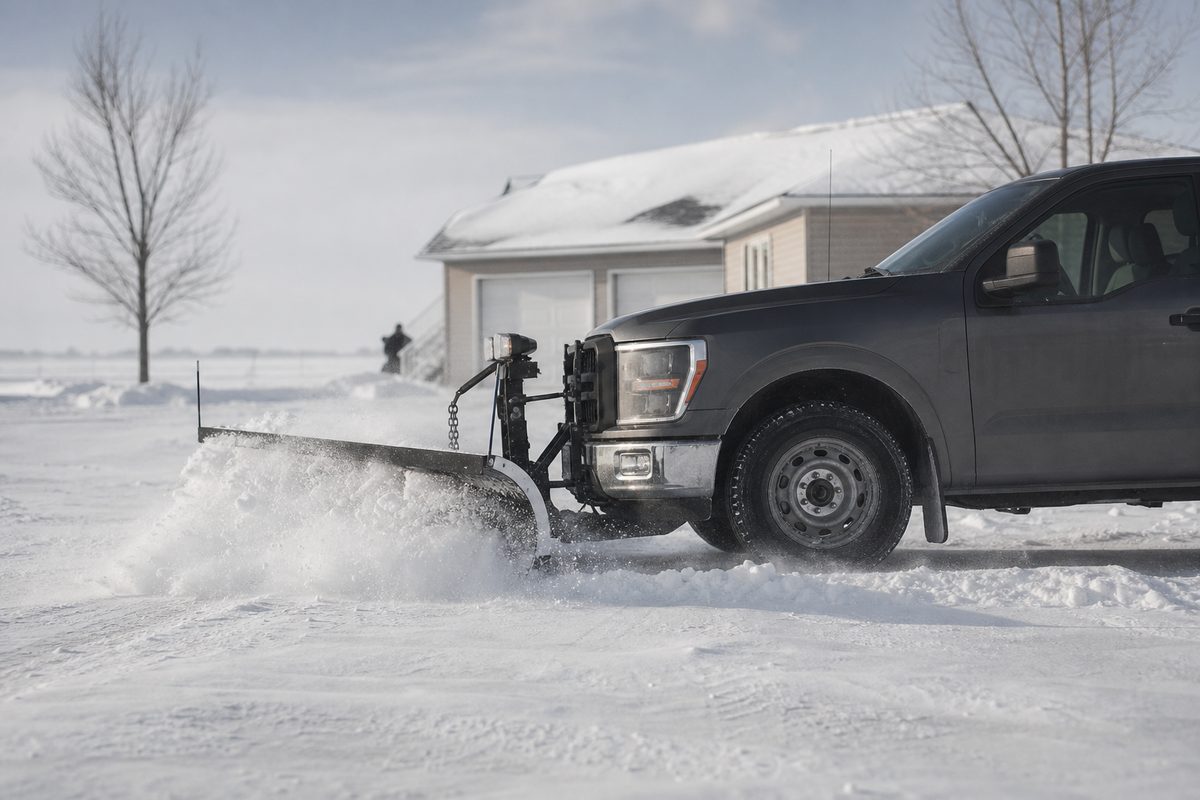
Snow Plowing in Saskatoon
Blade work for driveways, lanes, lots, and acreages, with the equipment matched to the surface.
Plowing is the fastest way to move a large volume of snow, which is why most clearing jobs are plowing jobs. The parts that go wrong are almost always about equipment matched badly to a surface, or snow pushed somewhere it comes back from.
Saskatoon Snow Co runs blade work across residential driveways, back lanes, small lots, and rural approaches.
Matching Equipment to the Surface
Concrete and asphalt take a steel edge directly and get cleared to the surface. That is the straightforward case.
Gravel does not. A blade at pavement height peels gravel off with the snow and redistributes the driveway into the lawn, so shoes go on to lift the edge and a thin compacted layer stays behind by design. Grit handles what is left rather than another scraping pass.
Interlock, pavers, and stamped concrete are the ones that get damaged quietly. A steel edge catches joints and lifts pavers, and the damage does not show until the melt. Those surfaces get shoes, a rubber or poly edge, or a blower instead of a blade.
Push Direction
Where the snow goes gets decided at the first clearing and lived with until spring. The considerations are the same everywhere: keep it off the approach so sightlines stay open, keep it off anywhere meltwater will run back across the cleared surface, and put it where the banks have room to grow without narrowing what you are clearing.
Getting this wrong compounds. Every storm builds on the last pile, and by the point it is obviously wrong there is no easy way to undo it without hauling.
Rural Approaches and Acreages
Acreage plowing is a different problem than a city driveway, and the difference is wind. A long open approach with nothing upwind drifts continuously during a blow, and it can fill behind the equipment faster than the pass clears it.
That changes the timing more than the technique. Going out mid-blow on an exposed approach is often wasted work, and waiting for the wind to drop produces a result that lasts. Where drifting is chronic, the fix is usually about what the snow is blowing across rather than how often it is cleared.
When Plowing Is Not Enough
A plow relocates snow. Once the banks have taken every metre they can without costing driveway width, sightlines, or parking, more plowing just makes the problem denser.
That is the point where snow hauling takes it off the property. For the residential version of blade work with the walks and windrow included, see driveway snow removal.
What's Included
- Equipment matched to the surface and the space
- Shoes fitted on gravel and interlock
- Long rural approaches and acreage lanes
- Push direction planned before the first storm
- Works alongside hauling when banks fill up
Other Services We Offer in Saskatoon
Snow Plowing Questions
What is the difference between plowing and snow removal?
Plowing pushes snow from where it is to somewhere else on the property. Removal means it leaves. Most jobs are plowing, and the distinction only starts to matter once the piles have taken all the room they can.
Can a plow damage a gravel driveway?
It can strip the surface if it runs at the same height it would on concrete. Skid shoes lift the blade slightly so it rides above the gravel, which leaves a thin compacted layer behind and is the correct trade on a gravel drive.
Do you plow acreages outside the city?
Long approaches and yard sites are regular work, with the caveat that drifting behaves completely differently out there. An open approach with nothing upwind can fill in faster than it can be cleared during a blow, which changes when it is worth going out.
What about interlock or stamped concrete?
Those get shoes and a softer edge, and sometimes a blower instead of a blade. A steel edge dragged across pavers catches the joints and lifts them.
Get a Free Snow Plowing Quote
Seasonal routes fill before the first real storm. Get a free quote on your property now.