
Roof Snow Removal in Saskatoon
Load taken off roofs before spring snow turns a winter's accumulation into real weight.
Roof snow is not usually a depth problem. It is a density problem, and it gets worse as winter goes on rather than better.
Saskatoon Snow Co clears roof loads on homes and small buildings, focusing on the areas where snow actually concentrates.
Snow Gets Heavier All Winter
The powder that falls here in January is dry and light. It does not leave, though. It sits through repeated thaw and freeze cycles, absorbs meltwater that cannot run off, compacts under its own weight, and gains density every month.
By March the same volume of snow can weigh several times what it did when it landed. That is why the highest roof loads of the season arrive in spring, and why a roof that carried the winter fine can get into trouble on a warm week in March.
Where Snow Concentrates
Roofs do not load evenly. Wind strips the exposed faces and dumps what it collects into predictable places.
Behind parapets on flat and low-slope roofs. In the valley where two roof planes meet. On a lower roof section below a taller wall, where snow both drifts in and slides down from above. Against anything projecting through the surface, like a mechanical unit or a chimney.
Those drift zones can hold several times the depth of the open field of the roof, and they are what gets checked first.
Signs Worth Acting On
Measuring depth from the ground tells you very little, given how much density varies. More useful is what the building does.
Interior doors that suddenly stop latching, new cracks appearing where walls meet ceilings, or a visible dip along a ridge or a beam line all suggest deflection under load. Any of those on a low-slope roof in late winter is worth taking seriously the same week.
How We Clear It
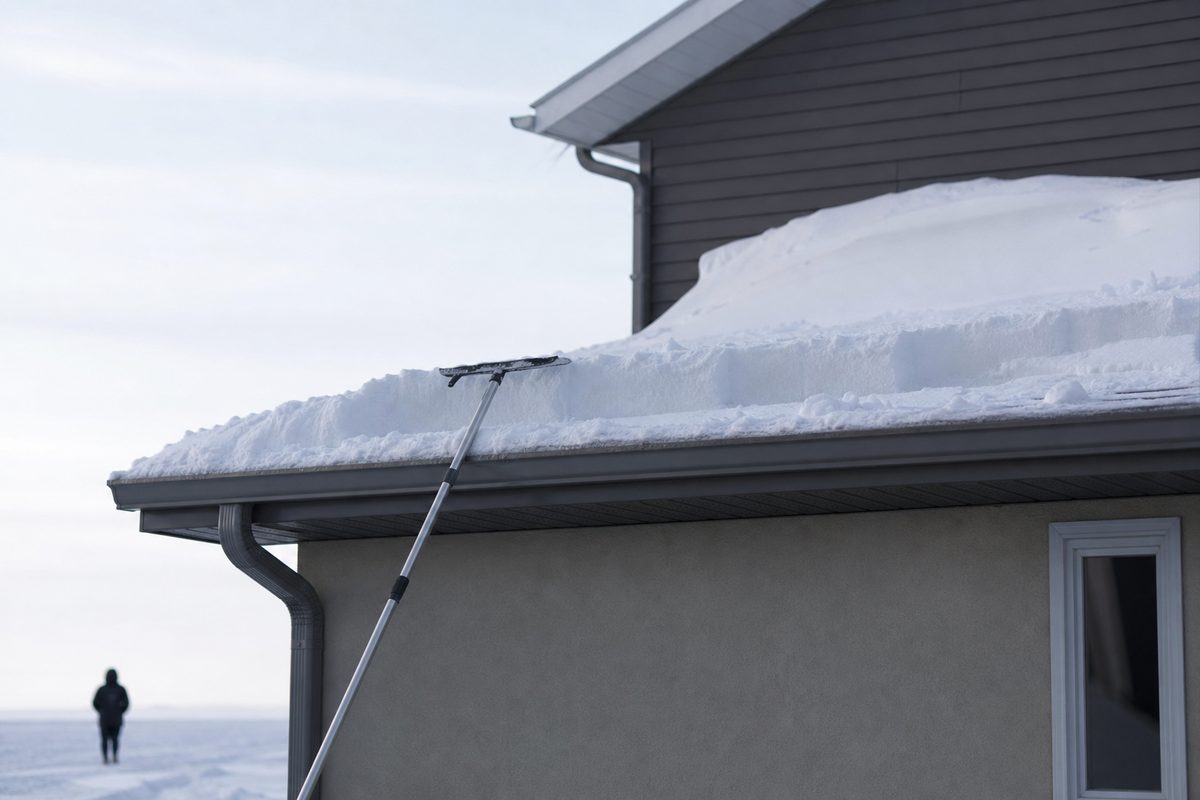
Rakes and hand work from ladders or the edge, not shovels driven across the surface. Membrane roofs and shingles both damage easily when frozen, and a metal edge dragged across cold shingles takes granules with it.
We clear to reduce load rather than to expose the roof. Leaving a layer behind is deliberate, because scraping to the surface is where roofs get damaged. Edge zones get particular attention since that is where meltwater refreezes and builds the ridges dealt with under ice dam removal.
For decks and balconies carrying the same seasonal accumulation, snow shoveling covers the hand work.
What's Included
- Low-slope and flat roofs, where load accumulates
- Drift zones behind parapets and roof changes
- Spring wet-snow loads cleared before the thaw
- Rakes and hand clearing, not shovels on shingles
- Ice dam prevention on chronic problem edges
Other Services We Offer in Saskatoon
Roof Snow Removal Questions
How do I know if there is too much snow on my roof?
Depth alone is a poor guide because density varies so much. Sixty centimetres of dry January powder can weigh less than twenty centimetres of March snow that has been through several thaw cycles. Signs worth acting on are doors inside that stop closing properly, new cracks in interior finishes, or visible sag along a ridge.
Why is spring the risky time?
Snow gets heavier as the season goes on rather than lighter. Meltwater soaks into the pack and refreezes instead of running off, so the same volume weighs progressively more. The heaviest load on most roofs happens in March, not at the peak of winter.
Can I just do it myself with a roof rake?
From the ground on a single-storey with a light load, often yes, working from the edge upward. Getting onto a snow-covered roof is a different matter entirely, and a roof that is loaded enough to worry about is not one to be walking on.
Do you clear the whole roof?
Usually not. The goal is reducing load and clearing the edge zones where ice dams form, and taking a roof down to bare surface risks damaging it. A layer left behind is normal and correct.
Get a Free Roof Snow Removal Quote
Seasonal routes fill before the first real storm. Get a free quote on your property now.