
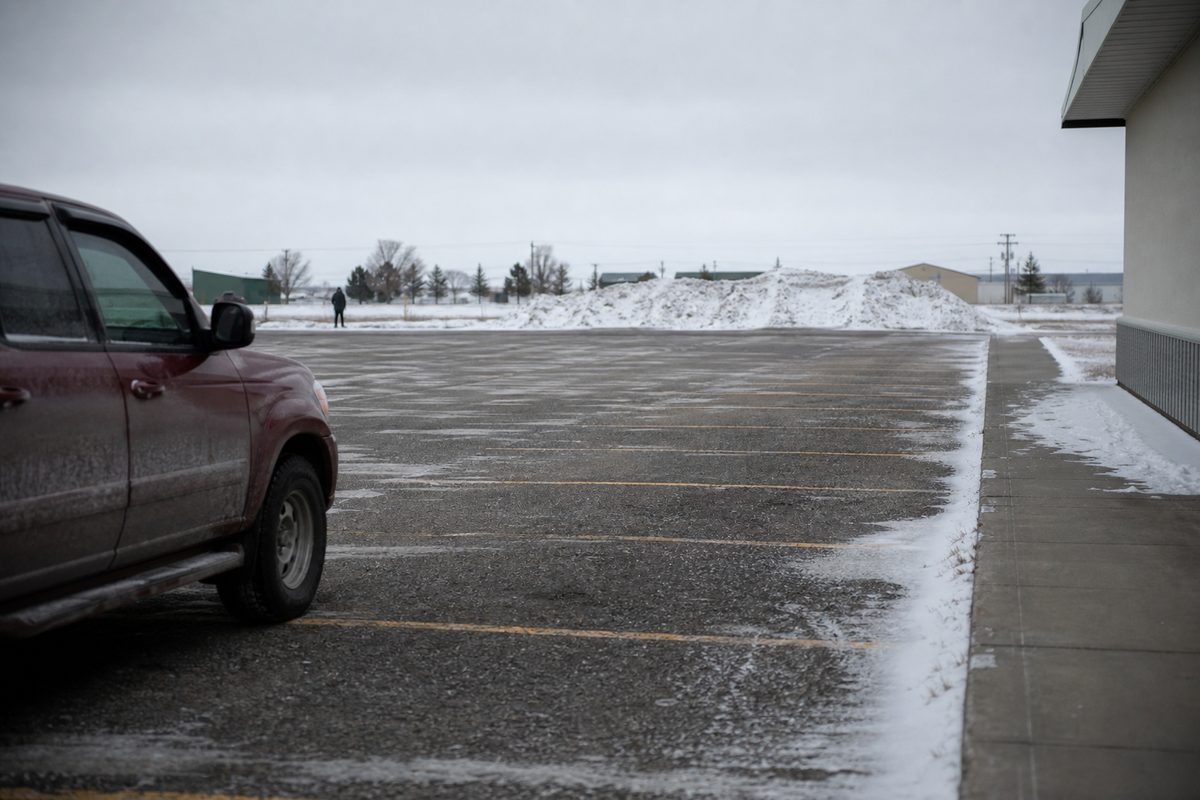
Parking Lot Snow Removal in Saskatoon
Lots cleared with the stacking planned so you do not lose stalls to your own snow banks by February.
A parking lot in February tells you how it was cleared in November. If the banks are eating the stalls and the entrance has a blind corner, the snow was pushed to whatever was closest each time rather than to a plan.
Saskatoon Snow Co clears small and mid-sized commercial lots with the stacking decided before the first storm.
Stalls, Not Just Aisles
The fast version of this job is running the aisles and calling it done. It looks cleared from the street, and every vehicle that parks then compacts the ridge left in its stall into ice that lasts until spring.
Clearing to the line takes longer and it is the difference between a lot that works all winter and one that degrades from December onward.
Where the Snow Goes
Stacking is the decision that determines how the lot performs for the rest of the season, and there are three things worth protecting.
Sightlines at the approach come first. A bank built beside the exit means drivers pull out blind onto the street, and it grows every storm.
Catch basins come second. A pile sitting on top of one has nowhere to drain when it melts, so meltwater spreads across the lot and freezes overnight into the widest ice sheet on the property. Piles go where the water can still get away.
Stall count comes third. Banks slump as they cycle through thaw and freeze, so a pile that starts against a curb creeps outward into the stalls beside it. On a lot with thirty spaces, losing five to your own snow in the busiest month of the year is a bigger cost than the clearing.
When Pushing Stops Working
Tight urban lots run out of storage. There is no arrangement of piles that keeps sightlines, drainage, and stall count intact once enough has fallen.
At that point the honest answer is removal rather than another rearrangement, and it is better identified in advance than discovered on a Monday morning. Snow hauling covers loading it out.
Treatment After Clearing
Lot surfaces get treated after clearing, with the entrances and the routes from accessible stalls prioritised. The product depends on temperature and pavement age, which is set out in ice control and salting.
For the entrances, walkways, and service side of a commercial property, see commercial snow removal.
What's Included
- Stalls cleared to the line, not just the aisles
- Stacking planned to protect parking count
- Sightlines kept open at the approach
- Drainage and catch basins considered before banks form
- Hauling arranged when the lot runs out of room
Other Services We Offer in Saskatoon
Parking Lot Snow Removal Questions
How many stalls does a snow bank actually cost?
More than expected. A bank pushed against a row of stalls does not stop at the curb, it slumps outward as it melts and refreezes, and by February a pile that started tidy is covering the stalls beside it. On a small lot losing four or five stalls in the busiest season is a real cost.
Where should snow be stacked on a small lot?
Away from the approach, away from catch basins, and on the side that costs the fewest stalls. The approach matters because banks at the entrance destroy sightlines for anyone pulling out. Drainage matters because a pile sitting on a catch basin turns every thaw into a pond and then a sheet of ice.
Do you clear stalls or just the driving aisles?
Stalls, to the line. Clearing only the aisles is what produces a lot where every parked car sits on a compacted ridge. It looks cleared from the road and is not.
When does hauling make sense instead of pushing?
When the banks have nowhere left to go without taking stalls or blocking sightlines. On tight urban lots that point often arrives in January, and it is cheaper to plan for it than to discover it.
Get a Free Parking Lot Snow Removal Quote
Seasonal routes fill before the first real storm. Get a free quote on your property now.